FriendCrib Mag
Writing in Graffiti on a Palm Pilot
The Palm Pilot put a calendar and address book in your pocket in 1996. You wrote on it with a stylus, using a one-stroke alphabet called Graffiti.
 Written by Daniel Rivera · 56k: ~1 min
The Palm Pilot was a handheld organizer, often called a PDA, that held your calendar, contacts and to-do list and synced them with your computer. The first models, the Pilot 1000 and Pilot 5000, came out in 1996, and you wrote on the screen with a stylus using a simplified alphabet called Graffiti. Palm devices were everywhere in offices and schools around 2000, and the company later moved into smartphones with the Treo. HP bought Palm in 2010, and the brand faded out not long after.
The block of wood
Before the first Pilot existed, Jeff Hawkins, who started Palm Computing, carried around a block of wood about the size he wanted the device to be. He pretended to check his calendar on it in meetings and used a chopstick as a stylus, counting how many steps everyday tasks would take. If something took too long on the pretend device, it got simpler on the real one.
The idea was to make something that did a few things really fast, instead of trying to be a computer in your pocket. That's why the first Palm Pilots felt so quick even with tiny amounts of memory. The Pilot 5000 had 512 kilobytes, which wouldn't hold a single photo today.
What is Graffiti on a Palm Pilot?
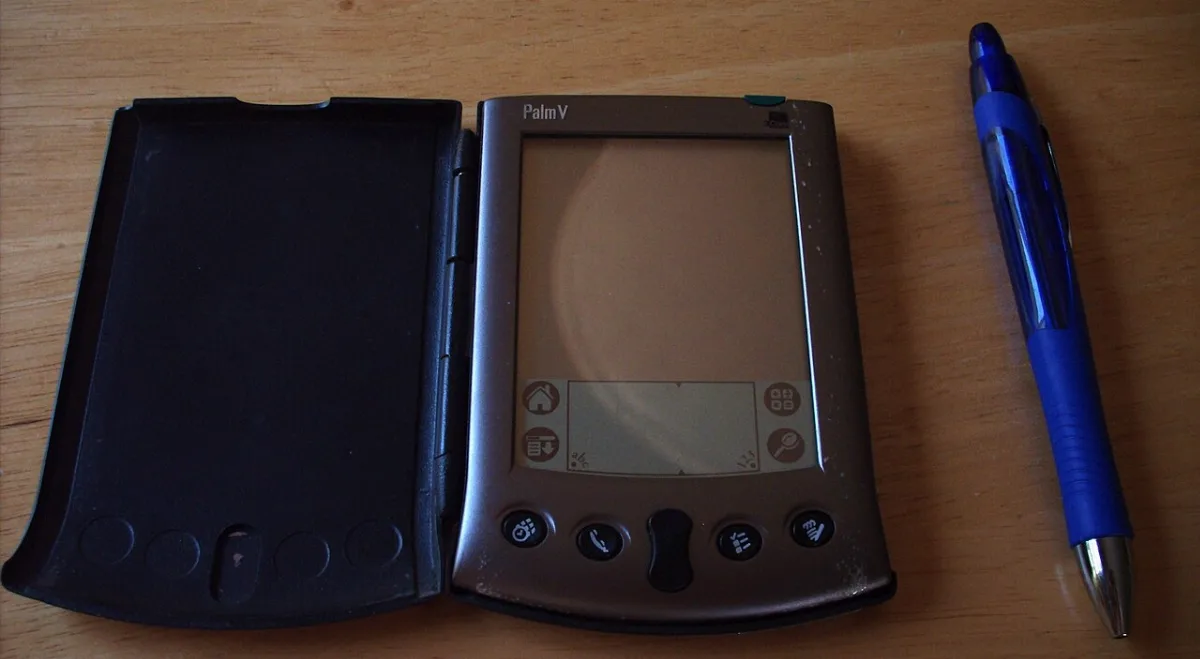
Graffiti was the handwriting system Palm Pilots used, a simplified alphabet where each letter was a single stroke you drew in a box at the bottom of the screen. An A looked like an upside-down V without the line across. A T was a line across and then straight down. You wrote letters on the left side of the box and numbers on the right.
Hawkins called it a skill you learn, like touch-typing. It took most people a few days to get comfortable, and after that they could write surprisingly fast. Some people got so used to it that they caught themselves writing Graffiti letters on paper.
Graffiti also ended up in a long legal fight. Xerox had patented a single-stroke writing system called Unistrokes, and a court found that Graffiti infringed it. Palm switched to a new system called Graffiti 2 in 2003, which used strokes closer to normal handwriting, and longtime users grumbled about relearning letters. A judge later found the Xerox patent invalid, and Palm paid Xerox $22.5 million to settle things.
HotSync and the cradle
Every Palm came with a cradle that plugged into your computer. You set the Palm in it, pressed the HotSync button, and your calendar and contacts traded updates with the desktop software. It made a little sound when it started and another when it finished, and plenty of people did it every morning before work.
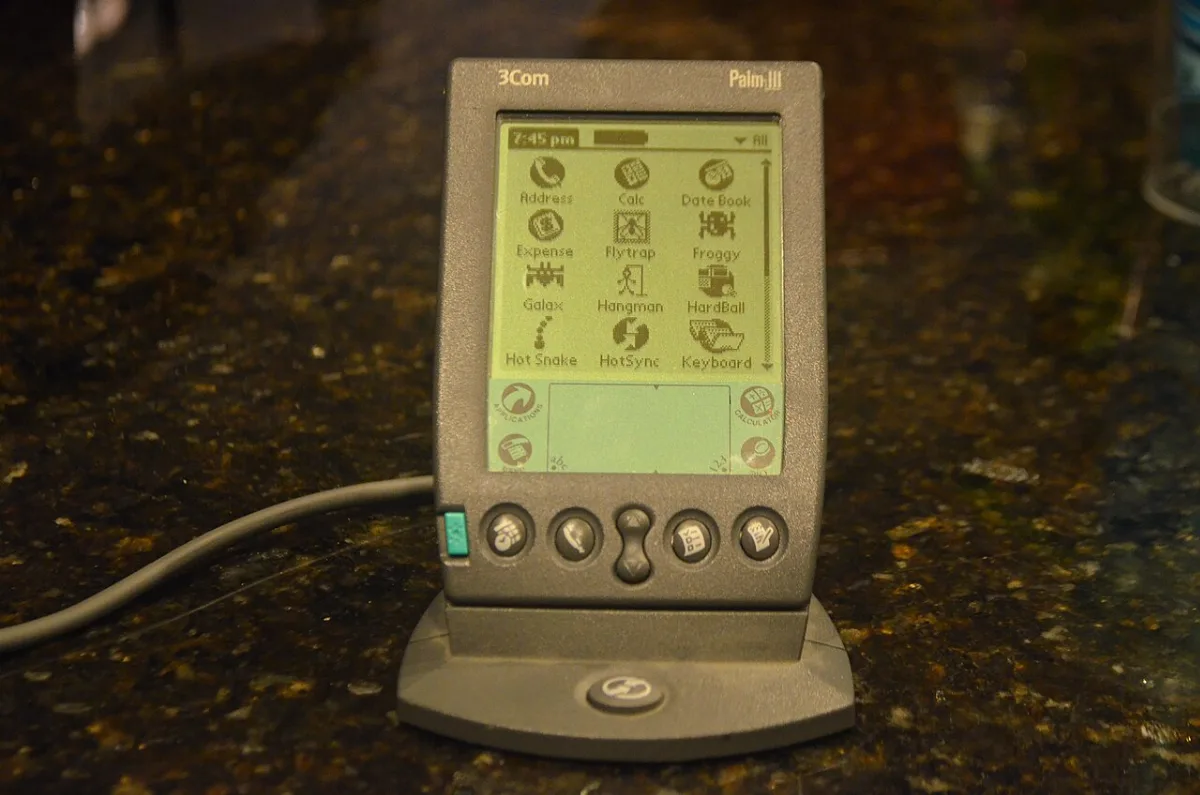
The first Pilots didn't have infrared, but the Palm III added it, and beaming became the fun part. Point two Palms at each other, and you could send a contact or even a small game across the room. Beaming your business card to a friend in the office felt like a spy movie, a small one.
Handspring and the Visor
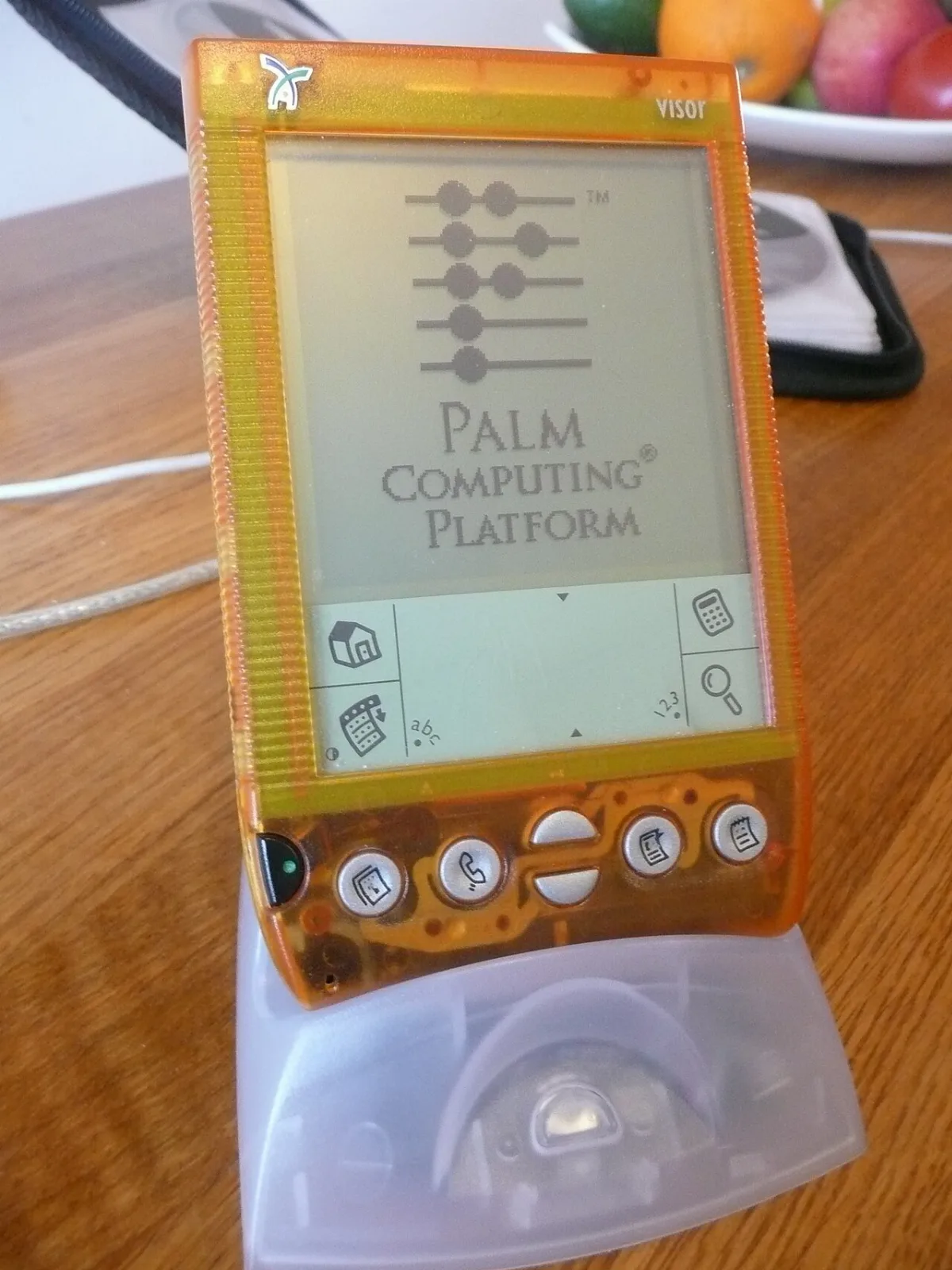
In 1998, Palm's founders left to start Handspring, and its Visor came in bright see-through colors. The Visor had a slot on the back called Springboard, where you could plug in extras such as extra memory, games or even a modem. Some modules turned it into a camera, years before photos we refused to delete lived on phones. It made the Visor feel like a toy and a tool at the same time.
Palm answered with slimmer models like the Palm V and later color screens, starting with the Palm IIIc. The Zire was the cheaper one for students, and the Tungsten line was for people who wanted the best. By then, Palm had moved its devices to faster chips, and the screens finally looked good.
Games on a PDA
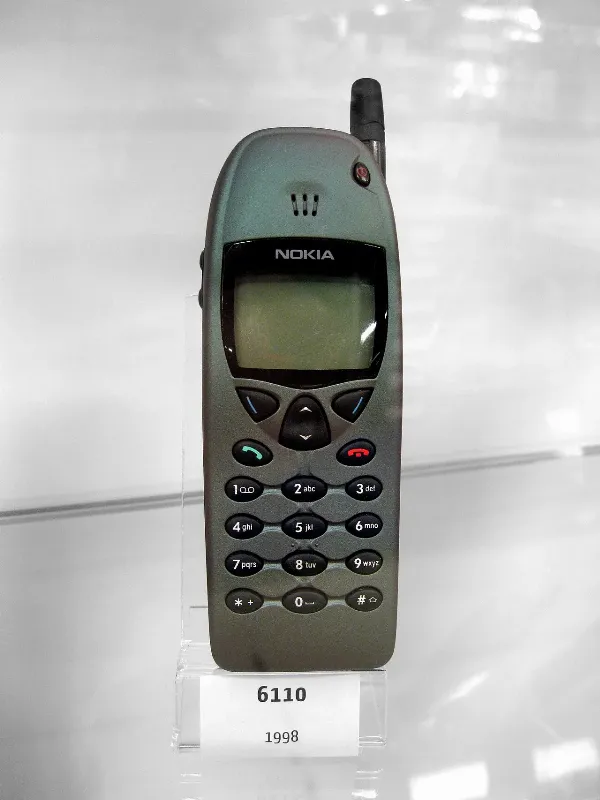
Palm Pilots weren't made for games, but people played them anyway. Puzzle games and little arcade copies passed from Palm to Palm over infrared, a lot like trading Tamagotchi care at recess. Playing during a long meeting or a boring class was a classic move, mostly because a Palm looked like you were doing something productive. Phones had their own pocket hit in Snake on the Nokia 3310.
Losing the stylus
Every Palm had a stylus that slid into a slot on the side, and every Palm owner lost one eventually. People poked the screen with pen caps and fingernails until a replacement arrived, and a straightened paper clip worked until it scratched something. Spare stylus packs were sold everywhere, and you could buy pens with a stylus tip on one end.
How the Palm Pilot changed personal tech, and why it disappeared. Watch on YouTube
Treo, Pre and the end
Handspring's Treo combined a PDA with a phone, and after Palm and Handspring merged, the Treo became one of the first smartphones lots of people owned. It sat right next to the Sidekick and BlackBerry as a status symbol in the mid-2000s.
Then the iPhone arrived. Palm tried a fresh start with the Palm Pre and its webOS software in 2009, and it had fans, but it couldn't catch up. In 2010, HP bought Palm for $1.2 billion. HP stopped using the Palm name in 2011 and stopped making webOS devices later that same year.
Things people remember
- Writing an upside-down V for the letter A
- The HotSync sound in the morning
- Beaming a game to a friend across the room
- A screen protector with a bubble you could never get out
- The backlight that turned everything green
- Losing the stylus, then finding it in the couch three months later
Why people still miss it
A Palm Pilot did one thing well: it kept your life in order without buzzing at you all day. It didn't have a feed or notifications. You checked it when you needed it and put it away. A lot of people miss that, the same way they miss phones that just made calls.
Your friends list lives on your crib now. Make one, add the people you used to beam contacts to, and leave them a comment. Here's a Top 8 of the Palm things I'd bring back first.
- #1 Graffiti letters
- #2 The HotSync cradle
- #3 Infrared beaming
- #4 The lost stylus
- #5 Handspring Visor
- #6 Palm V
- #7 Zire
- #8 Treo
You Might Also Remember
 Playing Snake on a Nokia 3310
 Hanging Out in IRC Channels With mIRC
 Waiting a Week for Disposable Camera Photos
 BonziBuddy and the Toolbars That Took Over
 Where Emoticons Came From :)
 The Digital Camera Photos We Refused to Delete
 A/S/L? Hanging Out in AOL Chat Rooms
 Tamagotchi and the Keychain Pets That Needed You at School
Your crib holds your contacts now. Come say hi.
Free, 18+ and no algorithm. Pick a profile song, rank your Top 8 and leave your friends comments.
Get Your Crib, It's Free