FriendCrib Mag
Waiting a Week for Disposable Camera Photos
Disposable cameras held 35mm film you couldn't see until a lab developed it, so every shot was a surprise. They're popular again with a younger crowd.
 Written by Claire Donovan · 56k: ~1 min
A disposable camera was a cheap plastic camera loaded with film that you used once, then handed over to a store to develop. Fujifilm made the modern version in Japan in 1986 and brought it to the US in 1987, and Kodak followed the same year. You couldn't see your photos until they were developed, so every shot was a surprise, and waiting days for prints was part of the deal. Disposables faded when digital cameras and phones took over, but younger people started buying them again in the 2020s.
How disposable cameras worked
A disposable camera was a cardboard-wrapped plastic box with a lens, a shutter button, a little window to look through and a wheel you turned with your thumb to move to the next shot. It had nothing to focus, nothing to zoom and no screen to check. You pointed, clicked and hoped.
Most had a flash, which you charged by holding down a button until a little light came on, often with a high-pitched whine. If you forgot to charge it, indoor pictures came out almost black. Everyone learned that lesson at least once, usually at a birthday party.

Fuji, Kodak and the first ones
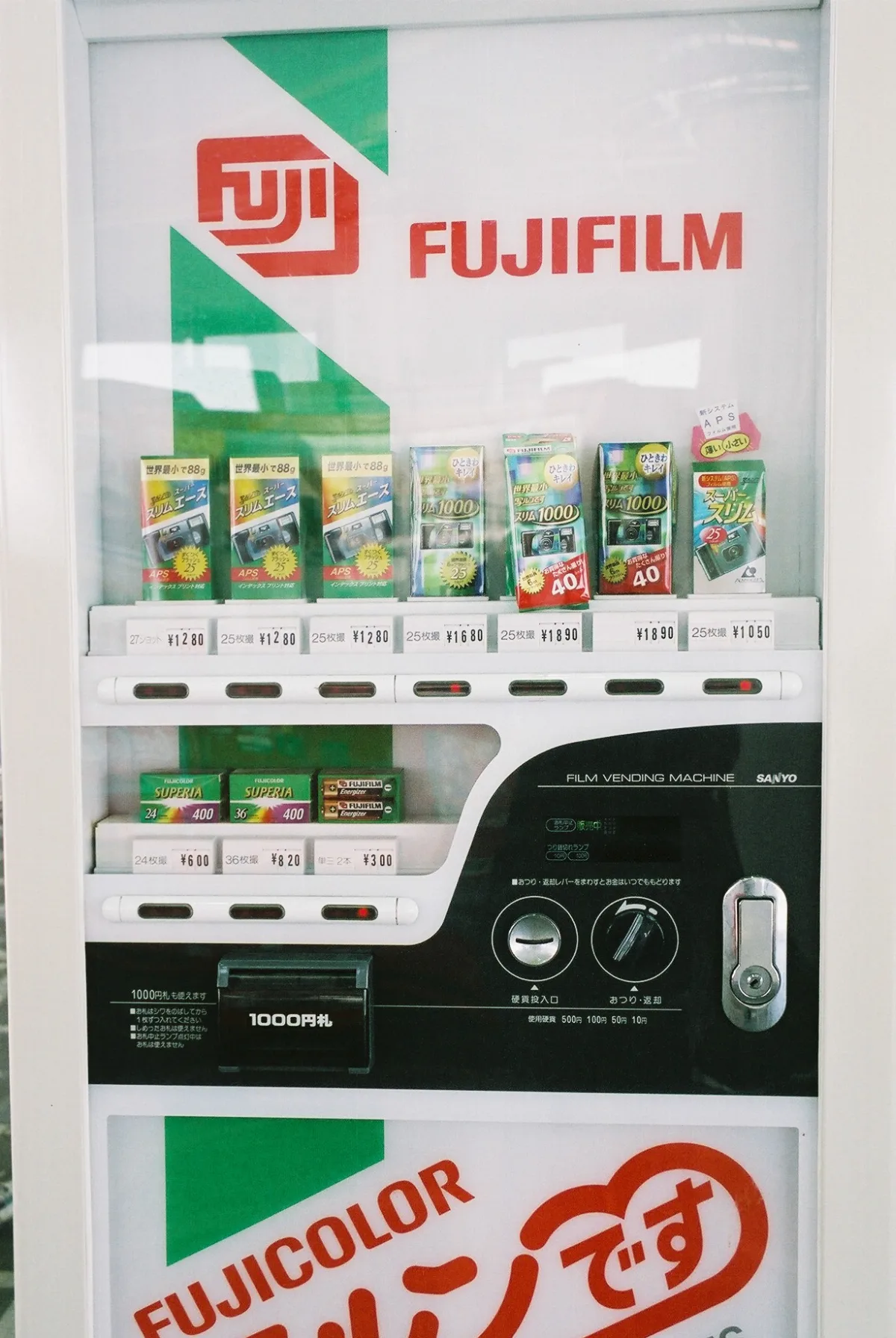
Fujifilm released its first disposable camera, called QuickSnap in the US, in 1986 in Japan and in 1987 in America. Kodak's first one, the Fling, came out in 1987 and used a smaller film size. Kodak later switched to 35mm film and renamed it the FunSaver. In 1988, Fuji added a flash, and disposable cameras took off. US sales jumped from about 3 million in 1988 to more than 21 million in 1990.
There were special versions too: waterproof ones for the beach and the pool, panoramic ones that made wide photos and even 3-D ones.
- 1986Fujifilm releases the first disposable camera in Japan
- 1987QuickSnap reaches the US, and Kodak's Fling comes out
- 1988Fuji adds a flash and sales take off
- 1990US sales pass 21 million, up from about 3 million
- 1997Japan peaks at more than 89 million
- 2012Japan falls to under 5 million
- 2019Japan climbs back above 9 million
Why did you have to wait for disposable camera photos?
You had to wait because the film inside had to be developed in a lab before anyone could see the pictures. When the roll was done, you dropped off the whole camera at a drugstore or photo counter, and they sent it out or processed it in a machine. Some places had one-hour service, but plenty of people waited days or even a week for their prints. You never got the camera back.
The pickup was the exciting part, and it beat any later Photobucket album for suspense. You opened the envelope right there in the store and flipped through the stack, finding out which photos turned out and which were blurry, dark or just a picture of someone's thumb.
The history of the disposable camera and its comeback. Watch on YouTube
Double prints and negatives
Photo counters often offered double prints, two copies of every photo, so you could keep one and give one to a friend. The envelope also came with negatives, the strips of developed film. You were supposed to keep them safe so you could get more prints later. Most people lost them within a year.

Counting your shots
Most disposable cameras held a set number of shots, and a little counter on top showed how many you had left. Running low changed how you used the camera. Early in the roll you took pictures of anything. Near the end you saved the last few for something special, then forgot and used them on a dog or a sunset you couldn't see properly through the tiny window.
Sometimes the counter said zero but the wheel still turned, and you got one or two bonus shots. Other times you finished the roll and kept clicking, sure there must be more.
Mystery rolls
Plenty of families had a disposable camera sitting in a drawer for months or years, half used and forgotten. Developing it was like opening a time capsule: old haircuts, a birthday party, a vacation nobody remembered taking. Some people still find undeveloped cameras today and get them processed just to see what's inside. The film may be faded or tinted after all those years, but the surprise is the same.
Weddings, field trips and vacations
Disposable cameras showed up everywhere people wanted photos without risking a real camera. Since the late 1990s, couples have left them on tables at wedding receptions so guests could take candid shots. Kids took them on field trips and to summer camp, the same way they carried a Tamagotchi to school. Families bought a waterproof one for every beach trip.
At the end of a trip you had a pile of cameras to develop, and nobody remembered which one was whose.
The comeback
Disposable cameras faded as screens took over the back of every camera and phone. In Japan, sales fell from a peak of more than 89 million in 1997 to under 5 million by 2012.
Then they came back. Younger people started buying disposable cameras for parties and trips, partly for the grainy, imperfect look and partly for the surprise of not knowing how the pictures turned out. By 2019, sales in Japan had climbed back above 9 million. Fujifilm has said that using film helps people stay in the moment instead of checking their screens.
Things people remember
- Turning the wheel until it stopped and the counter hit zero
- The whine of the flash charging up
- Taking a photo of your thumb without realizing it
- Opening the envelope in the store parking lot
- Double prints for your best friend
- A drawer full of negatives you never used
- Writing the date on the envelope so you'd remember which trip it was
- Splitting the developing cost with friends after a big trip
Photos worth keeping
Disposable camera photos were blurry, dark and sometimes completely wrong, and people loved them anyway. They captured real moments, not perfect ones. Half of a friend's face, a red-eyed dog, a blurry concert stage, a beach with the horizon crooked: those ended up on people's walls for years. If you have an old print you still love, scan it and put it in an album. It belongs next to the MySpace angle pics from a few years later.
Make a crib and give your favorite old photo a home.
You Might Also Remember
 The Emo Songs on Every Profile
 How Did T9 Texting Work on Old Flip Phones?
 Scrobbling Every Song to Last.fm
 GoldenEye 007 and Four-Player Split Screen
 Taping Songs Off the Radio Onto a Blank Cassette
 Pausing Live TV With a TiVo
 A Thousand Songs in Your Pocket: The First iPod
 Early YouTube Had Five-Star Ratings and a 10-Minute Limit
Upload your favorite old photo to your crib, blurry or not.
Free, 18+ and no algorithm. Pick a profile song, rank your Top 8 and leave your friends comments.
Get Your Crib, It's Free