FriendCrib Mag
The Nextel Chirp and Walkie-Talkie Phones
Nextel phones had a walkie-talkie button called Direct Connect, and the chirp was loud enough to hear across a room. The network shut down for good in 2013.
 Written by Daniel Rivera · 56k: ~1 min
In December 2004, Sprint agreed to pay about $35 billion for Nextel, a company best known for a phone that chirped. Nextel was the cell phone company with the walkie-talkie button. Direct Connect let you push a button on the side of your phone and talk instantly to someone else with a Nextel, and before anyone spoke, the phone let out a loud chirp. You heard that chirp everywhere in the early 2000s, from construction sites to school hallways. The phones ran on a network called iDEN that Motorola developed. Sprint's purchase closed in 2005, and the old network shut down for good on June 30, 2013.
Where Nextel came from
Nextel started in 1987 as a company called FleetCall, founded by Morgan O'Brien, Brian McAuley, Chris Rogers and Peter Reinheimer. The idea was to take radio frequencies the government had set aside for dispatch radios, the kind used by taxi and delivery fleets, and turn them into a phone network. It changed its name to Nextel Communications in 1993.
The network used iDEN, technology made by Motorola, which is why almost every Nextel phone was a Motorola. Nobody mistook one for anyone else's phone. They had a thick antenna and a big button on the side that looked like it belonged on a camera.

How did Nextel Direct Connect work?
Nextel Direct Connect worked like a walkie-talkie. You picked a contact, held down the button on the side of your phone and talked. The other person's phone chirped and your voice came out of the speaker right away, with no ringing and no answering. When you let go of the button, they could hold theirs and talk back. Compared to paging someone and waiting around for a call back, it felt like cheating.
For a work crew spread across a job site, it was perfect. A boss could reach a worker in a second, and nobody had to pick up a call. Nextel called it the first nationwide service of its kind.
Plenty of families and friends used it too. Instead of calling, you just chirped someone. The catch was that everyone around you heard both sides of the conversation, whether they wanted to or not.
The chirp
The chirp was a short, sharp beep that played before each message, and it was loud. You heard it in hardware stores and parking lots, and sometimes in the middle of a movie. If someone near you had a Nextel, you heard their whole day, including the part where they said "go ahead" and then waited for you to say it back.
For a lot of people the chirp got old fast. For others it was a status thing. A Nextel on your belt meant you were busy and important, or at least that you had a job where people needed you right now.
The rise and fall of Nextel and its walkie-talkie phones. Watch on YouTube
The phones
Nextel phones were mostly Motorola models with names that started with "i." They were known for being tough, which made sense for the construction crews and landscapers who used them. Some were built to survive drops and dust that would wreck a normal phone. Next to the tiny, breakable Nokia 3310, a Nextel felt like a power tool.
There were also flip phones for people who wanted something sleeker. The Motorola i730, approved by the FCC in July 2003, was a flip phone with a color screen and an outside display, plus GPS, which was a big deal then. Compared to flip phones with T9 from other carriers, a Nextel flip looked a bit tougher, with that walkie-talkie button on the side.
Nextel and NASCAR
Nextel also put its name on NASCAR's top series. The deal was announced in June 2003, and starting in 2004 the series was called the Nextel Cup, replacing Winston, which had held the name for 33 seasons. After the Sprint merger it became the Sprint Cup in 2008. Race fans who never owned a Nextel phone still knew the name from every race on TV.

Sprint buys Nextel
In December 2004, Sprint agreed to buy Nextel for about $35 billion, and the merger closed in August 2005. At that point Nextel had more than 20 million subscribers in the US. The two companies used different technology, and combining them turned out to be hard. Sprint later wrote off most of what it paid.
Boost Mobile and the chirp everywhere
The same network also ran Boost Mobile, a prepaid brand that sold push-to-talk phones without a contract. Boost aimed its phones at a younger crowd, and its ads made the walkie-talkie button feel cool instead of businesslike. Soon the chirp was in high school hallways and on the bus.
Teens liked that it felt instant. You didn't have to wait for someone to answer or tap out a text on a number pad. You pressed the button and talked, which made it the closest thing to a voice message before voice messages were a thing.
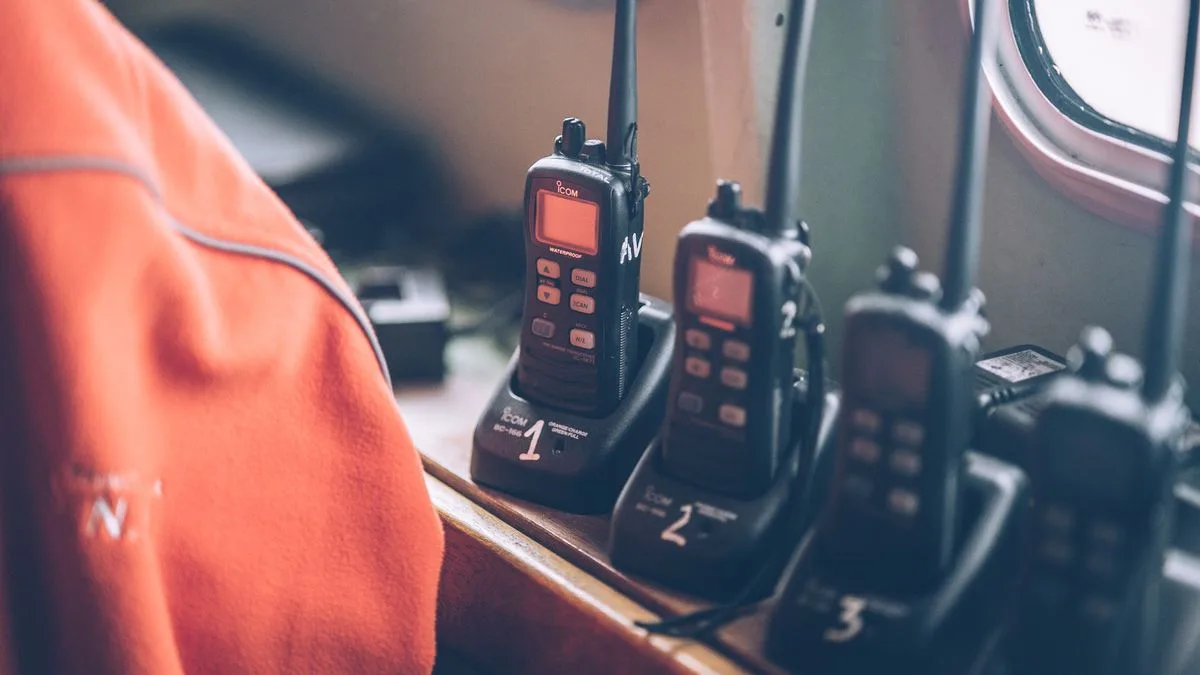
By the end, the old network was slow and small. In early 2012, Nextel had about 5.4 million subscribers left, and its data speeds were under 100 kilobits per second, far behind newer networks.
What happened to Nextel?
Nextel's network was shut down on June 30, 2013, at 12:01 a.m. Sprint had announced a few years earlier that it would phase out the old iDEN network, and customers were moved to Sprint's own network. By then, smartphones had taken over, and most people who still had Nextels were businesses that loved the walkie-talkie button. More than 100 people even held a goodbye "wake" for the network.
The sounds and sights of a Nextel
The chirp going off in a quiet room is the one most people mention first, usually followed by hearing both sides of a stranger's conversation in line. Dads on construction sites wore a Nextel clipped to the belt, and plenty of us held the button down and forgot to let go.
Then there was the thick antenna you pulled up for better signal, and the sound of "Nextel Cup" on every race broadcast.
Quick hellos
Nextel was all about reaching someone fast. On FriendCrib, the quick way to say hi is the Knock button on a friend's crib, and nobody within fifty feet has to hear it. Make your crib and knock on a few doors. If you liked tough gadgets, you'll probably also remember the Sidekick and BlackBerry.
You Might Also Remember
 How Did T9 Texting Work on Old Flip Phones?
 Furnishing Your First Apartment From Craigslist
 Swivel Screens and BBM: The Sidekick and BlackBerry Days
 How to Make a MySpace-Style Profile Today
 Playing Snake on a Nokia 3310
 AIM or MSN Messenger? Everyone Picked a Side
 A Thousand Songs in Your Pocket: The First iPod
 Wii Sports Bowling and the Living Room Tournament
Leave a friend a comment on their crib. No chirp needed.
Free, 18+ and no algorithm. Pick a profile song, rank your Top 8 and leave your friends comments.
Get Your Crib, It's Free