FriendCrib Mag
Paging Your Friends With Number Codes
Before texting, people sent messages to pagers using only numbers, and 143 meant I love you. A satellite failure in 1998 silenced most US pagers at once.
 Written by Natalie Brooks · 56k: ~2 min
Paging a friend with number codes meant calling their pager and typing digits on a phone keypad, because most pagers could only show numbers. People invented codes like 143 for "I love you" and 911 for "call me now," and the friend called you back from the nearest landline. Pagers, also called beepers, were small devices that buzzed or beeped when a message came in, and in the 1990s they were everywhere. At their peak in 1994, more than 61 million pagers were in use, and for a lot of teenagers, a pager was their first personal gadget.
Where pagers came from
Pagers go back a long way. Al Gross built an early telephone pager in 1949, and Motorola started calling them pagers in 1959. For decades they were tools for doctors and other people who needed to be reached fast. The early ones only made a tone. When it went off, you knew to call the hospital or the office, and that was the whole message.
In 1974, Motorola released the Pageboy I, its first successful consumer pager. It still had no screen. Later models added small displays that showed a phone number, and that's when things got interesting.
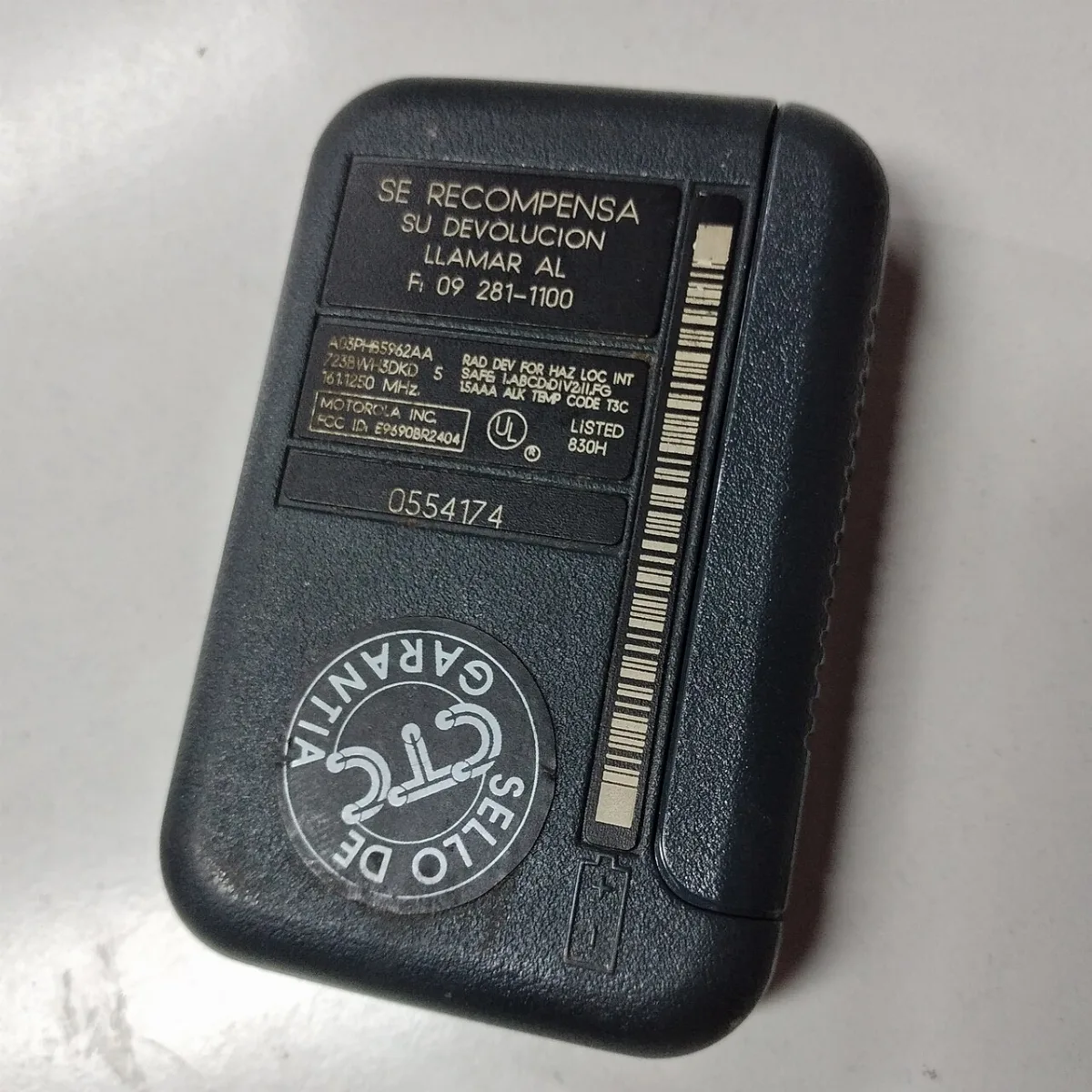
How did you send a message to a pager?
You sent a message to a pager by calling its phone number and typing numbers on your phone keypad, then pressing the pound key. The pager beeped or buzzed and showed the numbers you typed. Usually it was your phone number, so they knew who to call back. Then they had to find a phone, which often meant a pay phone, and call you.
Most pagers could only show numbers, so people got creative. If you didn't need a call back, you could just send a code. The other person read it, smiled, and the pager went back on their belt.
The number codes
The codes were a language of their own. 143 meant "I love you," because the words have one, four and three letters. 911 meant "call me right now," and it was usually serious, or at least dramatic. 411 meant "I've got news" or "what's up." 07734 meant "hello," because if you turned the pager upside down, the numbers looked like the word.
Friends made up their own codes too. A number might mean "meet at the mall" or "my parents are home." Couples had secret codes nobody else could read, and some people added their own number at the end so you'd know who sent a 143, which mattered a lot if more than one person might send one.
It was a lot like emoticons later on, a way to say more with a few characters than the screen was meant to hold. Anyone who has ever stared at a plain 143 and tried to decide what it meant coming from that person has already done the hard part.
How pagers worked, why they got a bad reputation and why hospitals still use them. Watch on YouTube
Pagers at school
As pagers spread to teenagers, schools pushed back. In the late 1980s, newspapers linked pagers to drug dealing, and that reputation stuck. A 1988 Washington Post piece reported on how pagers were spreading in the drug business. Some states and school districts banned them. New Jersey banned students from carrying them, and Chicago schools suspended students who were caught with one.
Pager companies tried to change the image. In 1994, Motorola started marketing pagers to teens with new designs and a deal with PepsiCo to offer cheap pagers. Clear cases and bright colors made pagers feel like a fashion accessory instead of something suspicious.
Pagers on the belt
Pagers came in odd shapes. Some were long and flat, others small and square, and a few had a little screen that flipped open. Most clipped onto a belt or the edge of a pocket. People bought holsters and colored cases to go with their outfits. A pager on your hip was a look.
Vibrate mode was a big deal. A beep in class got you in trouble, while a buzz against your hip was a secret only you knew about. People could tell whose pager was going off across a room by the sound, the same way they later knew each other's ringtones.

Later on, some pagers could show short text messages, and two-way pagers let you write back. They were the bridge between number codes and texting, and the same crowd that carried them ended up on Nextel phones or the Sidekick and BlackBerry. For a few years it all felt like the future.
The day the pagers went quiet
On May 19, 1998, around 6 p.m. Eastern time, a satellite called Galaxy IV failed. It carried signals for most pagers in the United States. Suddenly, an estimated 80 to 90 percent of the country's 40 to 45 million pager users lost service.
Doctors couldn't be reached and businesses lost contact with their workers. Somewhere a teenager stared at a pager that had never been so quiet. Service came back over the next few days as companies moved signals to other satellites. It was one of the first times people saw how much daily life depended on a single piece of technology in the sky.

Do people still use pagers?
Yes, some people still use pagers, mostly in hospitals. They work where cell signal is weak, the batteries last a long time and they're simple, which matters in an emergency. For almost everyone else, cell phones replaced them by the early 2000s, and the codes faded along with them.
Text messages on flip phones solved the biggest problem with pagers. You could finally send words. If you remember waiting by the computer instead, that crush sign-on moment was the other half of the same waiting game.
Pages you can still feel
| The moment | Why it stuck |
|---|---|
| Running to a pay phone | Every page meant finding one |
| 143 from someone you weren't sure about | You read it five times |
| Pagers on baggy jeans | A pager on your hip was a look |
| Turning the pager upside down | 07734 turned into a word |
| A 911 that was about nothing | Dramatic, as promised |
| The buzz on the nightstand at 2 a.m. | Somebody was thinking of you, or lost |
Some people kept a page like that in their head longer than they kept the pager.
Saying more than numbers
FriendCrib lets you leave a real message, a comment on a crib or a Knock when you stop by, with as many letters as you want. Make your crib and send a 143 the long way.
You Might Also Remember





Send a friend a message on FriendCrib. Letters included.
Free, 18+ and no algorithm. Pick a profile song, rank your Top 8 and leave your friends comments.
Get Your Crib, It's Free