FriendCrib Mag
Dance Dance Revolution at the Mall Arcade
Dance Dance Revolution came out in Japan in 1998 and filled arcades with people stomping on arrows. Later, it showed up in gym classes and living rooms too.
 Written by Daniel Rivera · 56k: ~1 min
Dance Dance Revolution, or DDR, was a Konami game where you stepped on arrows on a dance platform in time with arrows scrolling up the screen, and it first came out in Japanese arcades on November 18, 1998. It reached North America soon after and became a fixture at mall arcades, movie theaters and bowling alleys. Players drew crowds, especially the ones who could keep up on the hardest songs. Home versions with plastic dance pads brought it to living rooms, and some schools even used it in gym class.
How did Dance Dance Revolution work?
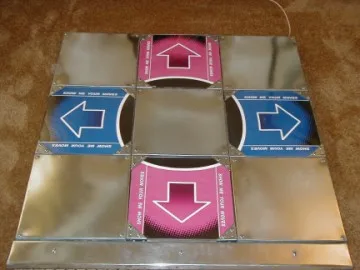
Dance Dance Revolution worked by scrolling arrows up the screen in time with a song. When an arrow reached the top, you stepped on the matching arrow on the platform under your feet: left, down, up or right. The better your timing, the better your rating, from Perfect down to Boo. Miss too many and the song ended early.
Each song had different difficulty levels, shown in feet. The original scale went from 1 to 7 feet, so a three-foot song was easy and a seven-foot song made you sweat. Later versions added harder songs, like "MAX 300," which got a rating of 10.
The arcade machine had two platforms, so you could play with a friend or battle someone you'd never met. There was a metal bar behind each one to hold onto, and the best players never touched it. Everyone else pretended not to.
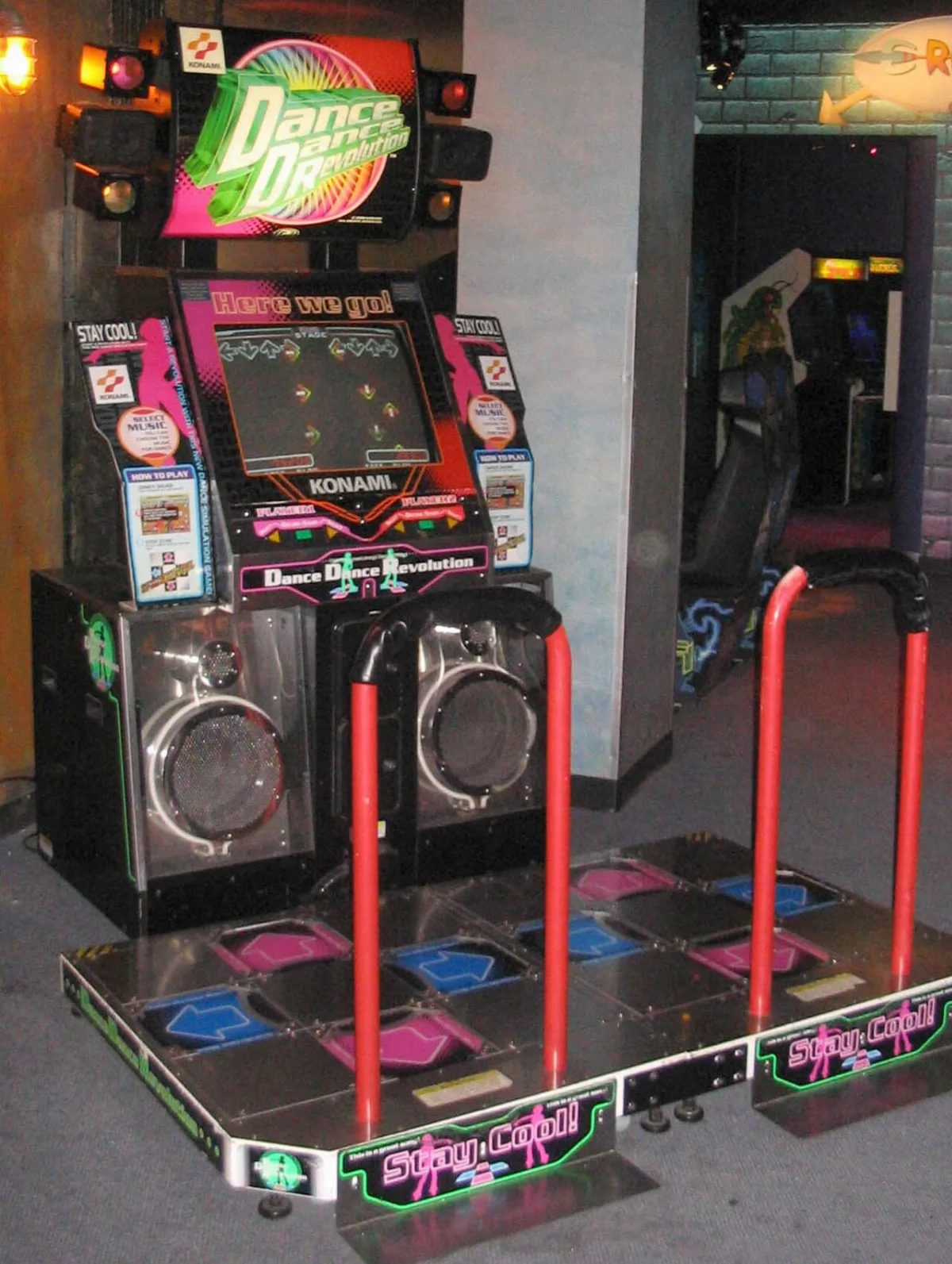
The arcade crowd
DDR was the rare arcade game that was fun to watch. Good players stomped through songs at full speed, some adding spins and freestyle moves. A small crowd usually gathered, and if you were new, playing in front of them took courage.
Every arcade seemed to have its regulars, the people who showed up every weekend and knew every song. They brought towels, sometimes their own shoes, and they played the hardest songs on the hardest setting while everyone else watched with their mouths open.
The music was part of it. DDR used fast, bright dance songs. Many came from Konami's own Bemani sound team, and some were licensed from dance albums. "Butterfly" by Smile.dk became one of the best-known songs in the whole series, and plenty of people still can't hear it without thinking of arrows.
The language of DDR
DDR had its own vocabulary, and regulars spoke it fluently. Every step got a judgment on screen, from Perfect and Great down to Good, Boo and Miss. String enough steps together without a miss and you built a combo, with the number climbing in the middle of the screen. At the end you got a letter grade, and a perfect run on a hard song was the kind of thing people bragged about for weeks.
Later versions added freeze arrows, long arrows you had to hold down with your foot until they ended. Some songs threw in jumps, where two arrows came at once, and fast streams of arrows that only the best players could read. Watching someone read those streams felt like watching a magic trick.
Players also talked about their feet. Some used both feet for every arrow, facing forward the whole time. Others turned their bodies to make long runs easier. Everyone had opinions about which way was right, and nobody changed their mind.
DDR at home
In 1999, DDR came to the PlayStation in Japan, and it reached the PlayStation in North America in March 2001. Home versions came with soft plastic dance pads you put on the floor. They slid around, folded at the corners and wore out fast, but they worked.

DDRMAX came out for the PlayStation 2 in the US in October 2002, followed by DDR Extreme in September 2004. Serious players bought metal pads that cost a lot more and didn't slide. Everyone else taped their plastic pads to the floor and hoped for the best. If a mall arcade wasn't close, the flash games at the lunch period arcade were the next best thing, and nobody had to sweat.
Inside the world of Dance Dance Revolution, from arcades to pro players. Watch on YouTube
DDR in gym class
DDR was also exercise, and schools noticed. In early 2006, West Virginia signed a deal with Konami to bring DDR to its schools. It started in 103 middle and junior high schools, with plans to add it to physical education or health classes in all 765 public schools within two years. The idea came from a study on using games to get kids moving, at a time when West Virginia had one of the highest obesity rates in the country.
Some colleges got in on it too. Caltech counted DDR toward part of its PE requirement, and the University of Kansas offered a one-credit DDR class.
For kids who hated regular gym, a day of DDR was a gift, much like Wii Sports bowling a few years later. Even the kids who refused to dance at school dances would step on arrows if it counted as a game. For the kids who already played at the mall, it was a chance to show off.
Is DDR still around?
DDR is still around in arcades, especially in Japan, and new versions kept coming for years. Its rating scale changed in later versions, with songs rated from 1 to 20. The longest DDR session in the record books ran more than 16 hours.
Plenty of the old machines are still in arcades too, scuffed arrows and all, and the songs from the early mixes still get picked first.
Rhythm games that came later, like Guitar Hero, owe a lot to DDR's arrows. Rock Band borrowed plenty from it too, and got whole families playing music games together.
What people remember
- Sliding off the plastic pad during a fast song
- Getting a crowd for the first time and messing up immediately
- The arrows scrolling faster than your brain could follow
- Holding the bar behind you and pretending you weren't
- The announcer yelling at you between songs
- Sweating through your shirt at the mall on a Saturday
- #1 Butterfly
- #2 MAX 300
- #3 Paranoia
- #4 Brilliant 2U
- #5 Dynamite Rave
- #6 Trip Machine
- #7 Boom Boom Dollar
- #8 Afronova
Games you play together
DDR was a game people played standing up, in a room full of friends. FriendCrib has a Games forum for arguing over which song was hardest. Get a crib and post your best score.
You Might Also Remember
 Where Emoticons Came From :)
 The Digital Camera Photos We Refused to Delete
 Hanging Out in IRC Channels With mIRC
 Wii Sports Bowling and the Living Room Tournament
 LAN Parties: Hauling a CRT Monitor to a Friend's House
 Chopping Logs in RuneScape
 Furnishing Your First Apartment From Craigslist
 Did You Remember to Feed Your Neopet?
Post your best DDR song on your crib.
Free, 18+ and no algorithm. Pick a profile song, rank your Top 8 and leave your friends comments.
Get Your Crib, It's Free