














FriendCrib Mag
Nobody Knew What a Facebook Poke Meant
Early Facebook needed a college email address, and every status update started with the word is. Nobody ever agreed on what a poke was supposed to mean.
 Written by Claire Donovan · 56k: ~2 min
Nobody ever explained what a Facebook poke meant, and the button never said. It sat on every profile next to a plain blue Wall where friends wrote messages, and it came from a site that started in February 2004 as TheFacebook, open only to Harvard students. For its first couple of years you needed a college or high school email to join, and every status had to start with the word "is." It opened to everyone 13 and older in September 2006, before the News Feed and apps changed the whole feel of it. There's more about that in writing on someone's Facebook Wall.
You needed a school email
At first, you could only join with a college email address, and you mostly saw people at your own school. That made it feel like a private yearbook. Facebook added more colleges, then high schools, then workplaces, before opening to everyone. A lot of college students were not happy when their little brothers and parents showed up.

Friendster had tried the friend network idea a couple of years earlier, until its pages got so slow that people left.
The Wall
Your profile had a Wall, a space where friends could write messages anyone could read. It worked a lot like the comment section on a MySpace page. People wrote inside jokes and birthday wishes, made weekend plans and kept up long back-and-forth conversations, sometimes called Wall-to-Wall, that anyone could scroll through.
Writing on someone's Wall was public, so you thought a little about what you said. Some people cleaned their Walls before parents joined.
What did a Facebook poke mean?
A Facebook poke meant whatever the person sending it wanted it to mean, because the button never said. Some people used it to say hi and some to flirt. Others used it to annoy, or just wanted to see what would happen. When someone poked you, you could poke them back, which could lead to a poke war that lasted for weeks.
Nobody knowing what it meant kept it interesting. Getting poked by someone you barely knew sent you straight to their profile, trying to figure out what they meant by it. At least everyone understood a relationship status, even when it said "It's complicated."

Statuses that started with "is"
Early status updates came with your name and the word "is" already filled in. You finished the sentence. "Sarah is studying." "Mike is so done with finals." People bent their grammar in every direction to make it work. Facebook dropped the required "is" in late 2007, and statuses could say anything.
Relationship status
Your profile had a relationship status, and changing it was a big deal. "In a Relationship," "Single" and the famous "It's Complicated" showed up for everyone to see. Going from one to another could spark a pile of Wall posts and a few phone calls from friends wanting the details.
Photos and tagging
Facebook let you upload albums and tag friends in photos. When someone tagged you, the picture showed up on your profile, which meant everyone could see that blurry party shot from last weekend. Untagging yourself became a common habit. Many of those photos came straight from the digital cameras everyone carried to parties.
Groups everywhere
Facebook groups were everywhere, and many of them were jokes. People joined groups with long, silly names about tiny things they agreed with, like hating early classes or loving a certain cereal. Joining was mostly a way to show your personality on your profile, a bit like the interests list on a MySpace page.
The profile itself
An early Facebook profile was a tidy list. There was your photo, your school and class year, your hometown, and sections for favorite music, movies, books and quotes. Under that came your interests, your political views if you wanted to share them, and a long block of text for an About Me. Everyone's page looked the same, blue and white with no way to change the colors. A few months before Facebook, its founder had built Facemash, a Harvard photo site modeled on Hot or Not.
That sameness was a big change from MySpace, where every profile looked different. Some people liked how clean it felt. Others missed their glitter and backgrounds.
Facebook's early design, from the first version through the next few years. Watch on YouTube
Friends and "how do you know"
When you added someone, Facebook sometimes asked how you knew them. You could pick things like living together, taking a class together or meeting randomly. It turned your friend list into a little map of your life, and reading how two people knew each other could be surprisingly entertaining.
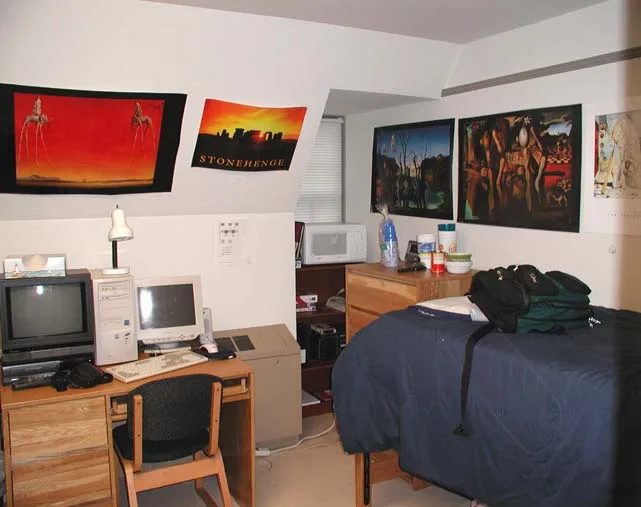
Friend counts mattered more than people admitted. Accepting a request from someone you barely knew was common, especially early in a school year, when everyone was trying to meet everyone.
The class schedule
In the college days, you could list your classes on your profile and see who else was taking them. Students used it to find study partners and to check whether that cute person from the first day was really in their lecture. It was useful and a little nosy.
The News Feed arrived
In September 2006, Facebook launched the News Feed, a page that showed what your friends were doing in one stream. Before that, you had to visit someone's profile to see their updates. A lot of users hated it at first and joined groups protesting it. The feed stayed, and it changed how everyone used the site.
Apps and requests
In 2007 Facebook opened to outside apps, and profiles quickly filled up with quizzes, games, virtual gifts and "superpokes" that let you throw a sheep at a friend. Then came endless requests to join games and send items. For many people, that was when Facebook stopped feeling small.
Notes
Facebook also had Notes, a place for longer writing. People used it for tag-style lists, like "25 Random Things About Me," and tagged friends to do the same, a lot like the old surveys.
Looking back
Early Facebook was simple and a little bit exclusive. You knew most of the people on it, the pages looked the same for everyone, and nothing was trying to keep you scrolling. It felt different from what MySpace was doing at the same time, with all those colors and songs.
No feed here
Every FriendCrib crib has a comment wall, and there's no News Feed deciding what you see. If you miss writing on a friend's Wall just to say hi, make a crib and leave someone a comment today.
You are visitor # 00000001
Your Memories
Nobody has shared one yet. Be the first.
Make a free crib or sign in to add yours.
You Might Also Remember
 Glitter Graphics and Sparkly Everything
 Why Did Photobucket Pictures Break?
 16 Things Everyone Had on Their Profile in 2006
 Where Emoticons Came From :)
 The Hampster Dance and the First Viral Pages
 The Digital Camera Photos We Refused to Delete
 It's Complicated: Changing Your Facebook Relationship Status
 What Happened to Friendster?
Want a profile without a feed? Make your crib on FriendCrib.
Free, 18+ and no algorithm. Pick a profile song, rank your Top 8 and leave your friends comments.
Get Your Crib, It's Free