







FriendCrib Mag
Wikipedia's Early Days and the Teacher Who Said Don't Use It
Wikipedia launched in 2001 as an encyclopedia anyone could edit. Teachers said not to use it, so we read it and cited the footnotes instead.
 Written by Natalie Brooks · 56k: ~2 min
Your teacher said not to use Wikipedia, and you opened it in the next tab anyway. Wikipedia is a free online encyclopedia that anyone can edit, and it launched on January 15, 2001. Jimmy Wales and Larry Sanger started it, and in the early 2000s it grew fast, from a small project to one of the most visited sites on the internet. Many teachers warned students not to use it for school because anyone could change it, and plenty of students used it anyway, just more carefully. Clicking from one page to another until it was suddenly 2am became a habit for everyone who grew up with it.
Who could edit Wikipedia?
Anyone could. The big idea was simple and shocking at the time: any visitor could click edit and change almost any page. That meant pages could grow quickly as people added what they knew. It also meant mistakes and vandalism showed up, sometimes for minutes and sometimes for longer. Volunteers worked constantly to fix bad edits and keep things accurate.
Changing a page for the first time felt a little thrilling, like writing in a library book and having it count.
It was a big change from where Wikipedia came from. It began in January 2001 as a side project of Nupedia, an encyclopedia where experts wrote every entry and each one went through seven steps of review. Nupedia finished 24 entries before it closed in 2003.
Why did teachers say not to use Wikipedia?
Teachers had a common rule: don't use Wikipedia as a source. The worry was that a page might have been changed by someone who didn't know the facts. Some students obeyed. Many read the Wikipedia page anyway to understand the topic, then went to the sources listed at the bottom and cited those instead.
That trick of using Wikipedia as a starting point turned out to be how a lot of people still use it. The footnotes often led to the real books and websites a report needed.
So did your teacher ban it?
Citation needed
Wikipedia pages used little notes in brackets to flag problems. The most famous was "citation needed," added to sentences that didn't have a source. It became an internet joke on its own. People used "citation needed" in conversations, on T-shirts and in comments whenever someone made a bold claim.
Other notes warned that a page might not be neutral or needed cleanup. Seeing a page full of warning boxes was a sign to read carefully.
Talk pages and edit wars
Every page had a talk page behind it, where editors discussed changes, a bit like a message board for one topic. Some talk pages were calm. Others were long arguments about tiny details, like how to spell a name or which photo to use. When editors kept undoing each other's changes, it was called an edit war, and some topics got locked so only experienced editors could change them.
Reading the talk page of a famous topic could be more entertaining than the page itself.
The rabbit hole
Wikipedia made it easy to get lost. You'd look up one thing, click a link inside the page, then another, then another. Twenty clicks later you'd be reading about a shipwreck, a type of cheese or a 14th-century king, with no idea how you got there. People turned it into a game, trying to get from one random page to another using only links.
There was also a link that took you to a random page, which could fill a whole afternoon. If that was your kind of evening, you probably also lost hours to StumbleUpon.
How did Wikipedia change school and search?
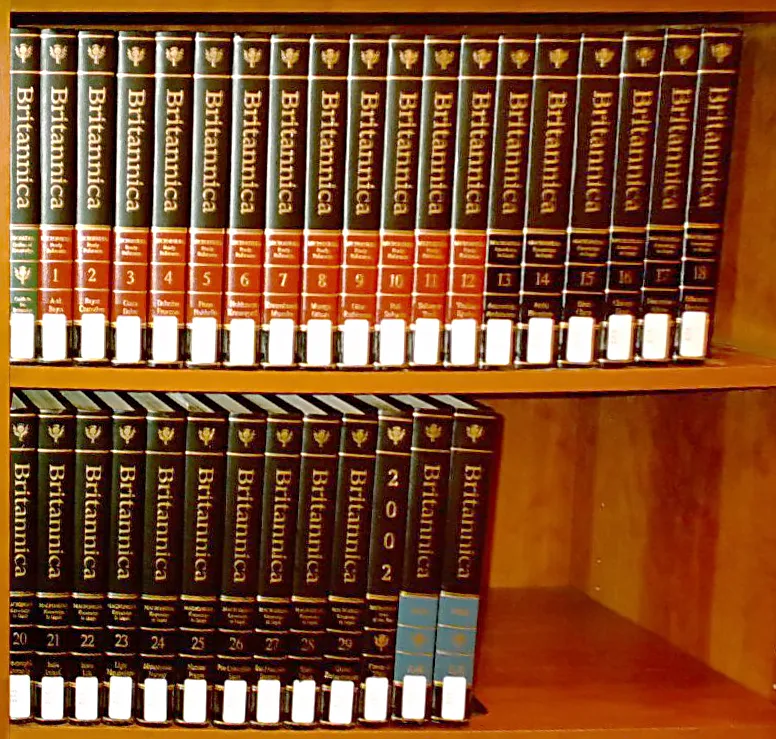
Wikipedia replaced a lot of what CD-ROM encyclopedias like Encarta used to do. It was free, and it changed within hours when something happened in the world. Search engines started showing Wikipedia pages near the top of results, and it became the first stop for many questions.
Microsoft ended Encarta in 2009, as more and more people turned to Wikipedia instead. For questions Wikipedia couldn't answer, people asked strangers on Yahoo! Answers.
Vandalism and joke edits
Because anyone could edit, people sometimes added jokes, nonsense or rude comments to pages. Famous pages got hit the most. Volunteers and automated tools reverted bad edits quickly, often within minutes. Some joke edits lasted just long enough for screenshots to go around, and those screenshots became part of internet humor.
Wikipedia added more protection over time, such as locking certain pages and requiring accounts for edits to sensitive topics.
Growing fast
In its first few years, Wikipedia grew at an amazing pace. New pages appeared every day on every topic you could imagine, from history and science to TV shows and video games. Some of the most detailed pages were about pop culture, because fans loved writing about their favorite things. That made it the go-to place to settle arguments about a show or a band.
Settling arguments
Before Wikipedia, a dinner table argument about who sang a song or how tall a mountain was could go on forever. Afterward, somebody pulled up the page and ended it, or at least moved the argument to whether the page was right. Looking things up mid-conversation became normal, first on the family computer and later on phones. The person who always reached for it first got a reputation.
A short history of how Wikipedia started and grew. Watch on YouTube
Other languages
Wikipedia wasn't only in English. Versions in many other languages grew alongside it, written by volunteers around the world. Clicking over to another language version of the same page could show a completely different take on the same topic.
Who wrote all of it?
Wikipedia ran on volunteers, people who wrote, edited and checked pages for free in their spare time. Some focused on fixing commas. Some wrote huge, detailed pages about their favorite subjects. Others hunted for vandalism. The site was supported by donations through a nonprofit, the Wikimedia Foundation, and its yearly fundraising banners became familiar too.
Odds and ends
- The puzzle-globe logo in the corner
- Joke edits to a celebrity's page that lasted just long enough for screenshots
- Copying a whole Wikipedia page into Word and then rewording it for homework
- The first time you clicked "edit" just to see what would happen
Know a lot about something?
On FriendCrib, you can write about what you love in your blog and About Me, with no citation needed. If you get stuck, here's how to write an About Me. Join FriendCrib and share the topic you could edit a whole page about.
Somewhere there is still a browser tab open to a page about a shipwreck, and you have no idea how you got there.
Your Memories
Nobody has shared one yet. Be the first.
Make a free crib or sign in to add yours.
You Might Also Remember


Share what you know with friends. Make your crib on FriendCrib.
Free, 18+ and no algorithm. Pick a profile song, rank your Top 8 and leave your friends comments.
Get Your Crib, It's Free