FriendCrib Mag
Building Coasters in RollerCoaster Tycoon
RollerCoaster Tycoon came out in 1999, and Chris Sawyer wrote almost all of it in assembly code. You built coasters and read every guest's thoughts.
 Written by Daniel Rivera · 56k: ~3 min
In RollerCoaster Tycoon you heard the screaming on a drop long before you could make out a single tiny face. The game was a PC game where you built and ran your own amusement park, and it came out for Windows in March 1999. You laid down rides, paths, food stands and bathrooms, then tried to keep thousands of tiny guests happy enough to keep spending money. Its creator, Chris Sawyer, programmed almost the entire game by himself, mostly in assembly language. It sold millions of copies and spawned sequels, and fans are still building parks today.
One person, one huge game
Chris Sawyer was a Scottish game developer who had already made Transport Tycoon. He wrote about 99 percent of RollerCoaster Tycoon in x86 assembly, a very low-level kind of code, with only a small part in C. That's one reason the game ran smoothly on ordinary home computers of the time, even with thousands of guests walking around the park. Anyone who ever tried to run a big city builder on the same family PC will know how rare that was.
Hasbro Interactive published it under the MicroProse label. It came out in North America on March 22, 1999, and in Europe a few weeks later. It sold well right away. In the United States it sold about 720,000 copies in 1999 alone, and more than 4 million copies had sold around the world by mid-2002.
How a park came together
Each scenario gave you a goal, like reaching a certain number of guests by the end of October in year three, or hitting a certain park rating. You started with some cash, a small piece of land and maybe a few rides already built. Think of it as a very cheerful homework assignment.
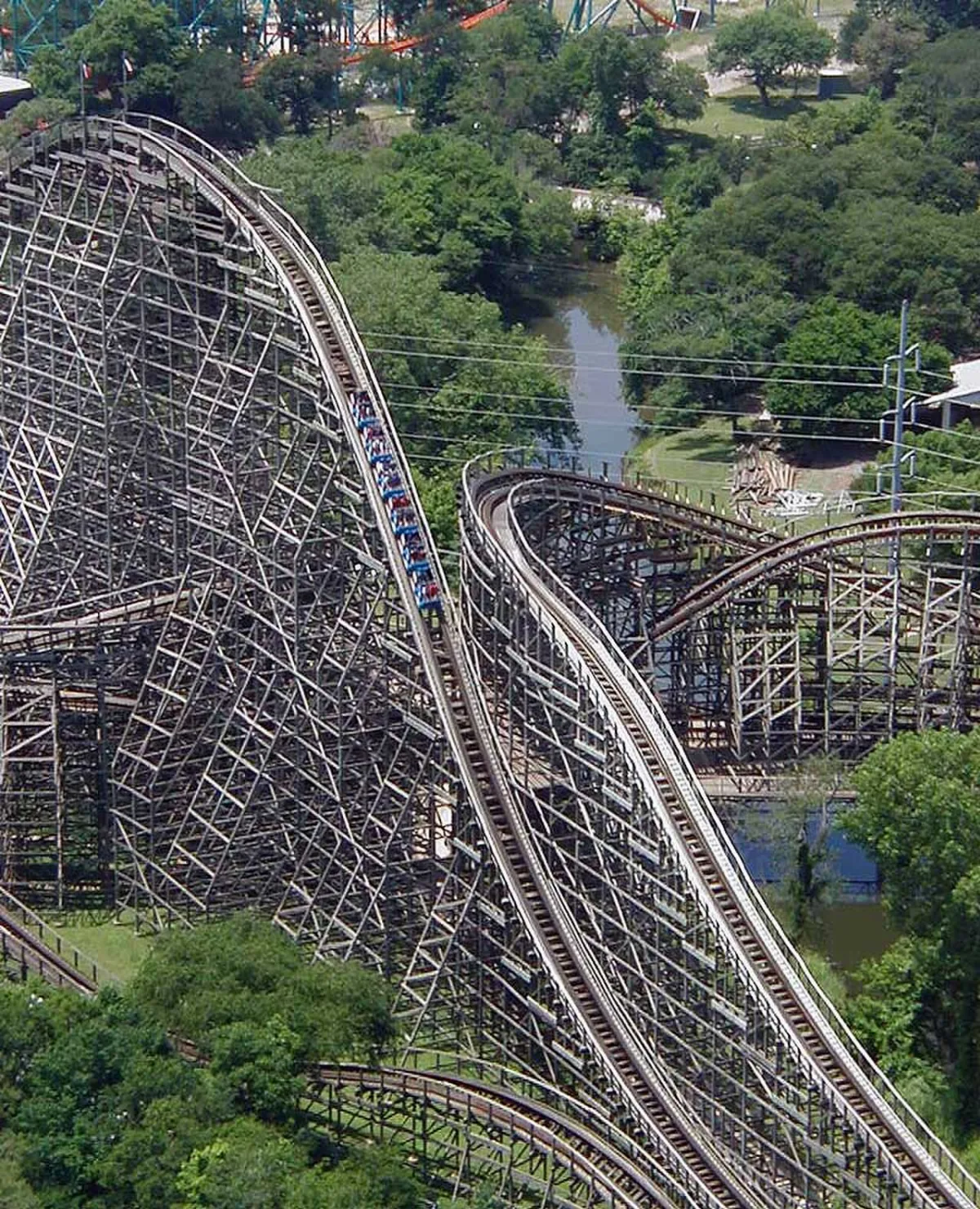
You could choose from pre-built coasters, or build your own track piece by piece. Building your own was where the game got you. You added a lift hill and a drop, then a turn and a loop, and sent a test train around while you watched the ratings for excitement, intensity and nausea. A coaster too intense would scare everyone off. One that made people sick would leave the paths a mess.
Guests had thoughts, and you could read them. Click on one and you might see that they were hungry, that the park was too expensive or that a ride was "too intense for me." Some couldn't find the exit at all. Fixing those complaints, one guest at a time, was half the fun, and it reminded me of looking after a Tamagotchi with a few thousand more mouths.
Forest Frontiers and the first parks
The first scenario most people played was Forest Frontiers, a patch of empty land in the woods with a goal of reaching a set number of guests. After that came parks like Dynamite Dunes, Leafy Lake and Diamond Heights. Each was a little harder, with less money, stranger land or rides that kept breaking down. Beating one scenario unlocked the next, so there was always a reason to keep going.

Every park also had a loan you could raise or pay off. Lots of players maxed it out on day one, built a giant coaster and hoped for the best. If the guests showed up, it worked. If they didn't, you watched the cash number go red while everyone complained about the price of the bathrooms.
The things players did to guests
Every player eventually tried something mean. A coaster whose track ended in midair sent the cars flying off. A guest who annoyed you could be picked up and dropped somewhere strange. Some people built a maze that never ended, or a ride that charged a huge price for nothing.
Most people did this once, felt a little guilty and went back to building a nice park. Some never stopped. Either way, the game let you play the hero or the villain, a lot like the Sims and its pool ladders.
How RollerCoaster Tycoon was made, and what happened to the series after. Watch on YouTube
Expansions and sequels
The first expansion, Added Attractions, came out in November 1999 and was sold in North America as Corkscrew Follies. Loopy Landscapes followed in September 2000. Between them they added new rides, scenery and scenarios. An Xbox version came out in 2003.
RollerCoaster Tycoon 2 came out in October 2002, again made by Sawyer. It added a scenario editor and more ways to design whole parks. RollerCoaster Tycoon 3 arrived in November 2004 and moved the series into full 3D, made by Frontier Developments with Sawyer as a consultant. You could finally ride your own coasters from the front seat, which felt huge after years of watching tiny trains from above.
Is RollerCoaster Tycoon still around?
Yes, RollerCoaster Tycoon is still around. RollerCoaster Tycoon Classic, which combines the first two games, came out on phones and tablets in December 2016 and later on Windows and Mac. Fans also built OpenRCT2, a free open-source rebuild of the second game that started in 2014. It still needs the original game files, but it runs on modern computers and adds features like online multiplayer.
Not every new version landed well. RollerCoaster Tycoon World, which came out in 2016, got a rough reception from longtime fans, who mostly went back to the older games.

What was going wrong in your park
Something was always going wrong. The handymen wandered off and stopped sweeping, a path ran right up to the entrance and nowhere else, and the mechanics took the long way around to a broken ride. The "Park rating" bar went red once the bathrooms ran out.
When it started raining, plenty of players raised the umbrella prices.
- 1999RollerCoaster Tycoon comes out in March, then Added Attractions in November
- 2000Loopy Landscapes adds more rides and scenarios
- 2002RollerCoaster Tycoon 2 arrives in October
- 2004RollerCoaster Tycoon 3 goes full 3D
- 2014Fans start OpenRCT2
- 2016RollerCoaster Tycoon Classic comes to phones and tablets
Why people still build parks
Playing RCT on the family computer was a lot like playing flash games at lunch. Ten minutes or six hours, there was always one more ride to fix. It also gave a lot of kids their first taste of designing something and watching other people, even pretend ones, use it. A kid who spent a weekend on a park might well have shown it off at a LAN party later.
On FriendCrib, the closest thing is decorating your crib. Pick your colors, set up your Top 8 and watch your friends wander through. Start yours and build something people want to visit.
You Might Also Remember
 Trading Pokémon With a Link Cable
 Minesweeper and Solitaire on the Office Computer
 Raiding in World of Warcraft When It Was New
 When Did Club Penguin Shut Down?
 Writing on Someone's Facebook Wall Before Timeline
 Bidding Wars and Sniping: eBay in the 2000s
 Thanks for the Add and the Comments That Filled Every Profile
 Wikipedia's Early Days and the Teacher Who Said Don't Use It
Post a screenshot of your best park on your crib.
Free, 18+ and no algorithm. Pick a profile song, rank your Top 8 and leave your friends comments.
Get Your Crib, It's Free